
Is Shockwave Therapy Painful? What Patients Should Expect
If you’ve been recommended shockwave therapy for a painful tendon, heel pain or a long-standing musculoskeletal injury, one of the first questions you’re likely to ask is, “Is shockwave therapy painful?”
The short answer is that most people experience some discomfort during treatment, but it is usually manageable and only lasts for a short time. In fact, a mild level of discomfort often indicates that the treatment is being applied to the affected area.
Shockwave therapy has become an increasingly popular, non-surgical treatment for persistent tendon and joint pain. It is widely used by physiotherapists and healthcare professionals to help stimulate the body’s natural healing process, particularly when other conservative treatments have not provided enough relief.
In this guide, we’ll explain what shockwave therapy feels like, why it may cause temporary discomfort, what happens during treatment and what you can expect before, during and after your appointment.
What Is Shockwave Therapy?
Shockwave therapy, also known as Extracorporeal Shockwave Therapy (ESWT), uses high-energy acoustic waves to target damaged or slow-healing tissues.
The treatment is designed to encourage the body’s natural repair process by increasing blood flow, stimulating tissue regeneration and helping to break down long-term scar tissue or calcification in certain conditions.
Unlike surgery or injections, shockwave therapy is non-invasive, meaning there are no incisions, stitches or lengthy recovery periods.
What Conditions Can Shockwave Therapy Treat?
Shockwave therapy is commonly recommended for chronic musculoskeletal conditions, including:
- Plantar fasciitis (heel pain)
- Achilles tendinopathy
- Tennis elbow
- Golfer’s elbow
- Patellar tendinopathy (jumper’s knee)
- Rotator cuff tendinopathy
- Calcific shoulder tendinopathy
- Greater trochanteric pain syndrome (hip pain)
- Hamstring tendinopathy
- Persistent tendon injuries that have not responded to rest or physiotherapy
It is generally considered when symptoms have lasted for several weeks or months and have not improved with conservative treatment.
Is Shockwave Therapy Painful?
Most patients describe shockwave therapy as uncomfortable rather than painful.
During the session, you may feel a series of rapid tapping or pulsing sensations over the affected area. The level of discomfort varies depending on:
- The condition being treated
- The location of the injury
- How inflamed the tissues are
- Your individual pain tolerance
- The intensity of the treatment
Areas with significant inflammation or long-standing tendon damage may feel more sensitive during the first treatment. However, the discomfort usually becomes easier to tolerate as the session progresses.
Your physiotherapist can also adjust the intensity of the treatment to ensure it remains within a comfortable level.
What Does Shockwave Therapy Feel Like?
Patients often describe the sensation as:
- Rapid tapping against the skin
- Repetitive pulses
- Deep pressure over the injured area
- Mild aching during treatment
- Brief sharp sensations over particularly tender spots
Although the sensation may feel unusual at first, most treatment sessions last only five to ten minutes.
Once the treatment ends, the discomfort usually settles quickly.
What Happens During a Shockwave Therapy Appointment?
Your appointment will usually begin with an assessment to confirm that shockwave therapy is appropriate for your condition.
The physiotherapist will identify the exact area causing your symptoms before applying a small amount of ultrasound gel to the skin.
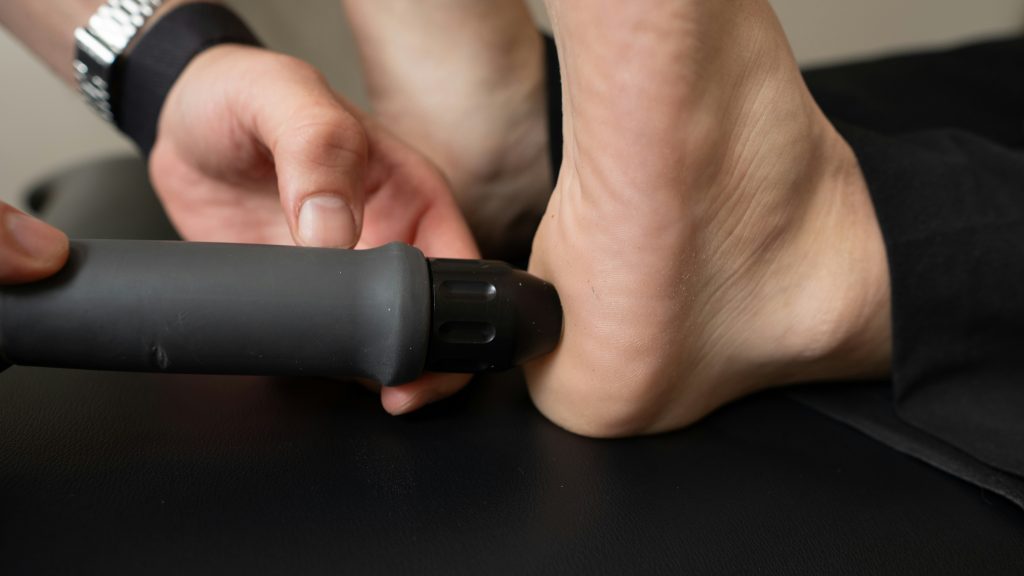
A handheld shockwave device is then placed over the affected tissue. The machine delivers a series of acoustic waves into the injured area while the therapist adjusts the settings according to your comfort and clinical needs.
Most appointments take between 15 and 30 minutes, although the actual shockwave treatment typically lasts less than 10 minutes.
What Should You Expect After Treatment?
It is normal to experience mild soreness for 24 to 48 hours after your appointment.
Some patients describe the sensation as similar to muscle soreness after exercise.
You may notice:
- Mild aching
- Temporary tenderness
- Slight swelling
- Redness around the treatment area
These effects are usually temporary and settle without any additional treatment.
Your physiotherapist may recommend avoiding high-impact activities for a day or two while the tissues begin to respond to the treatment.
How Many Sessions Will I Need?
Most people require a course of treatment rather than a single session.
Depending on your condition, many physiotherapists recommend between three and six sessions, usually spaced one week apart.
Some patients begin to notice improvements after the first or second treatment, while others experience gradual progress over several weeks as the body’s natural healing response develops.
Because shockwave therapy stimulates tissue repair rather than providing instant pain relief, improvements often continue even after the treatment course has finished.