
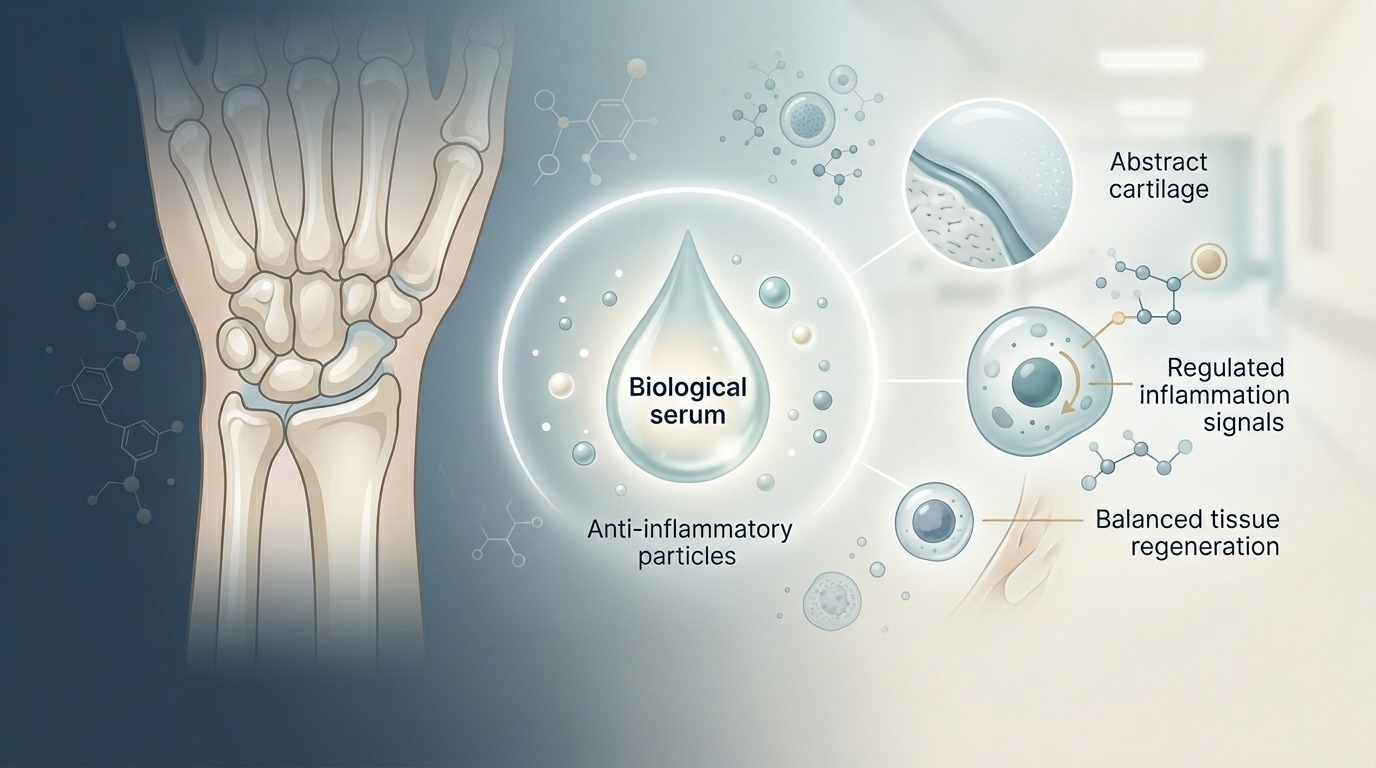
Biological Injections for Arthritis: How Safe Are They?
Arthritis affects millions of people across the UK, limiting movement, reducing independence, and impacting quality of life. While painkillers, physiotherapy, and steroid injections remain common first-line treatments, many patients eventually reach a point where these options no longer provide meaningful or lasting relief.
In recent years, biological injections have emerged as an alternative approach—one that focuses less on suppressing symptoms and more on supporting the body’s natural repair processes. But as interest grows, so does an important question:
How safe are biological injections for arthritis?
This article provides a clear, balanced, and evidence-informed explanation to help UK patients understand what biological injections are, how they work, their safety profile, and when they may be appropriate.
Understanding Arthritis Beyond “Wear and Tear
Arthritis is often described as a simple consequence of ageing or joint overuse. In reality, it is far more complex.
At a biological level, many forms of arthritis—particularly osteoarthritis—involve:
Persistent low-grade inflammation
Imbalanced inflammatory proteins within the joint
Progressive cartilage breakdown
Altered joint mechanics and pain signalling
Traditional treatments often focus on reducing pain, but they rarely address these underlying biological processes.
This is where biological injections differ fundamentally from conventional therapies.
What Are Biological Injections?
Biological injections are treatments derived from natural biological sources, often the patient’s own blood, designed to influence inflammation and tissue healing at a cellular level.
Unlike synthetic medications, these therapies work by interacting with the body’s own regulatory systems rather than overriding them.
Common types of biological injections used for arthritis include:
Autologous conditioned serum therapies (such as Sanakin)
Platelet-based injections
Other cell-signalling or protein-based treatments
Each type differs in composition and purpose, but all aim to modify the joint environment, not just numb pain.
How Biological Injections Work in Arthritis
Arthritic joints often contain excess inflammatory messengers that continuously signal pain and tissue breakdown.
Biological injections work by:
Reducing harmful inflammatory signalling
Supporting anti-inflammatory pathways
Encouraging a more balanced joint environment
Allowing natural repair mechanisms to function more effectively
Importantly, they do not force healing; they create conditions that allow healing to occur.
Safety Is the First Question Patients Should Ask
When considering any injection-based therapy, safety must come before effectiveness.
Biological injections are increasingly chosen because they offer a favourable safety profile, particularly when compared with repeated steroid injections or long-term medication use.
However, safety depends on how the treatment is prepared, administered, and selected for the right patient.
Are Biological Injections Safe for Arthritis?
Short answer:
When appropriately used and clinically supervised, biological injections are considered safe for many arthritis patients.
Longer answer:
Safety depends on several key factors:
1. Autologous Nature Reduces Risk
Many biological injections used in arthritis treatment—such as Sanakin—are autologous, meaning they are derived from the patient’s own blood.
This significantly reduces risks such as:
Allergic reactions
Immune rejection
Transmission of infection
Because the body recognises its own biological material, tolerance is generally excellent.
2. Lower Systemic Side Effects
Unlike oral anti-inflammatories or long-term pain medication, biological injections:
Act locally within the joint
Do not circulate widely through the body
Do not burden the liver, kidneys, or stomach
This makes them particularly attractive for patients who cannot tolerate medications or who already manage other health conditions.
3. Compared to Steroid Injections
Steroid injections are effective in the short term but raise concerns with repeated use:
Cartilage weakening
Tendon damage
Reduced tissue quality
Short-lived relief
Biological injections aim to support tissue health rather than degrade it, making them a safer long-term option for many patients when used appropriately.
What Are the Possible Side Effects?
No medical treatment is entirely risk-free. With biological injections, side effects are typically mild and temporary.
Common, short-term effects may include:
Mild swelling at the injection site
Temporary stiffness
Short-lived increase in discomfort as the joint responds biologically
These effects usually settle within a few days and are part of the body’s adaptive response.
Serious complications are rare when treatment is performed by experienced clinicians using sterile protocols.
Who Should Avoid Biological Injections?
Biological injections are not suitable for everyone.
They may not be recommended if a patient has:
Active joint infection
Certain blood disorders
Advanced, end-stage arthritis requiring joint replacement
Severe joint deformity
Unrealistic expectations of instant pain relief
A thorough assessment is essential to ensure both safety and effectiveness.
Why Proper Clinical Assessment Matters
One of the biggest safety risks does not come from the injection itself—but from poor patient selection.
A responsible clinic will always:
Perform a detailed medical history
Review imaging such as MRI or ultrasound
Assess the stage of arthritis
Discuss realistic outcomes
Explain alternative options
This ensures biological injections are used at the right time, for the right reason.
How Sanakin Fits Into Safe Arthritis Care
Sanakin therapy is a specific type of biological injection designed to target inflammatory imbalance within arthritic joints.
It focuses on increasing naturally occurring anti-inflammatory proteins rather than suppressing inflammation completely.
This makes it particularly relevant for:
Early to moderate arthritis
Patients seeking non-surgical options
Individuals wanting to reduce medication dependence
Those exploring long-term joint health strategies
Its safety profile is strongly linked to its autologous nature and controlled preparation process.
Why UK Patients Choose Specialist Clinics
In the UK, access to biological injections through the NHS remains limited. As a result, many patients turn to specialist private clinics that focus on advanced, evidence-informed arthritis care.
A reputable provider in this space is CortexCure, which integrates biological injections such as Sanakin into comprehensive arthritis management programmes. Their approach emphasises safety, personalised assessment, and non-surgical treatment pathways.
What Does the Evidence Say About Safety?
Clinical studies and real-world data suggest that biological injections:
Have a low complication rate
Are well tolerated across age groups
Can be safely repeated when clinically indicated
Show fewer long-term risks compared to repeated steroid use
Ongoing research continues to refine protocols, improve outcomes, and clarify ideal patient selection.
Managing Expectations Is Part of Safety
One overlooked aspect of safety is expectation management.
Biological injections are not:
Instant painkillers
Guaranteed cures
Replacements for lifestyle or rehabilitation changes
They are best understood as biological support tools that work gradually and often in combination with physiotherapy, weight management, and activity modification.
When expectations are realistic, patient satisfaction and safety outcomes improve significantly.
The Future of Arthritis Treatment in the UK
As understanding of inflammation and joint biology evolves, arthritis treatment is moving away from repetitive symptom suppression toward regenerative and biologically informed care.
Biological injections represent a shift toward:
Early intervention
Tissue preservation
Reduced medication reliance
Delayed or avoided surgery
Safety remains central to this evolution—and when used responsibly, biological therapies are becoming an increasingly trusted option.
Final Thoughts
Biological injections for arthritis are not experimental shortcuts or unproven trends. When used correctly, they represent a safe, thoughtful, and patient-centred approach to managing joint pain and inflammation.
For UK patients seeking alternatives to painkillers, steroids, or surgery, biological treatments—particularly autologous options like Sanakin—offer a promising balance of safety and biological logic.
As always, the key lies in choosing the right treatment at the right time, guided by experienced clinicians.